PG, 108 minutes
4 Stars
Review by © Jane Freebury
On screen, the difficulties during the construction of iconic landmarks of the Paris skyline have been the subject of fiction and documentary features alike. The people who were opposed to an Eiffel Tower in their midst, or a Pompidou Centre, or a Pyramid in the courtyard of the Louvre, tells one side of the story, while the personal and professional cost for the proponents of a controversial development tells another.
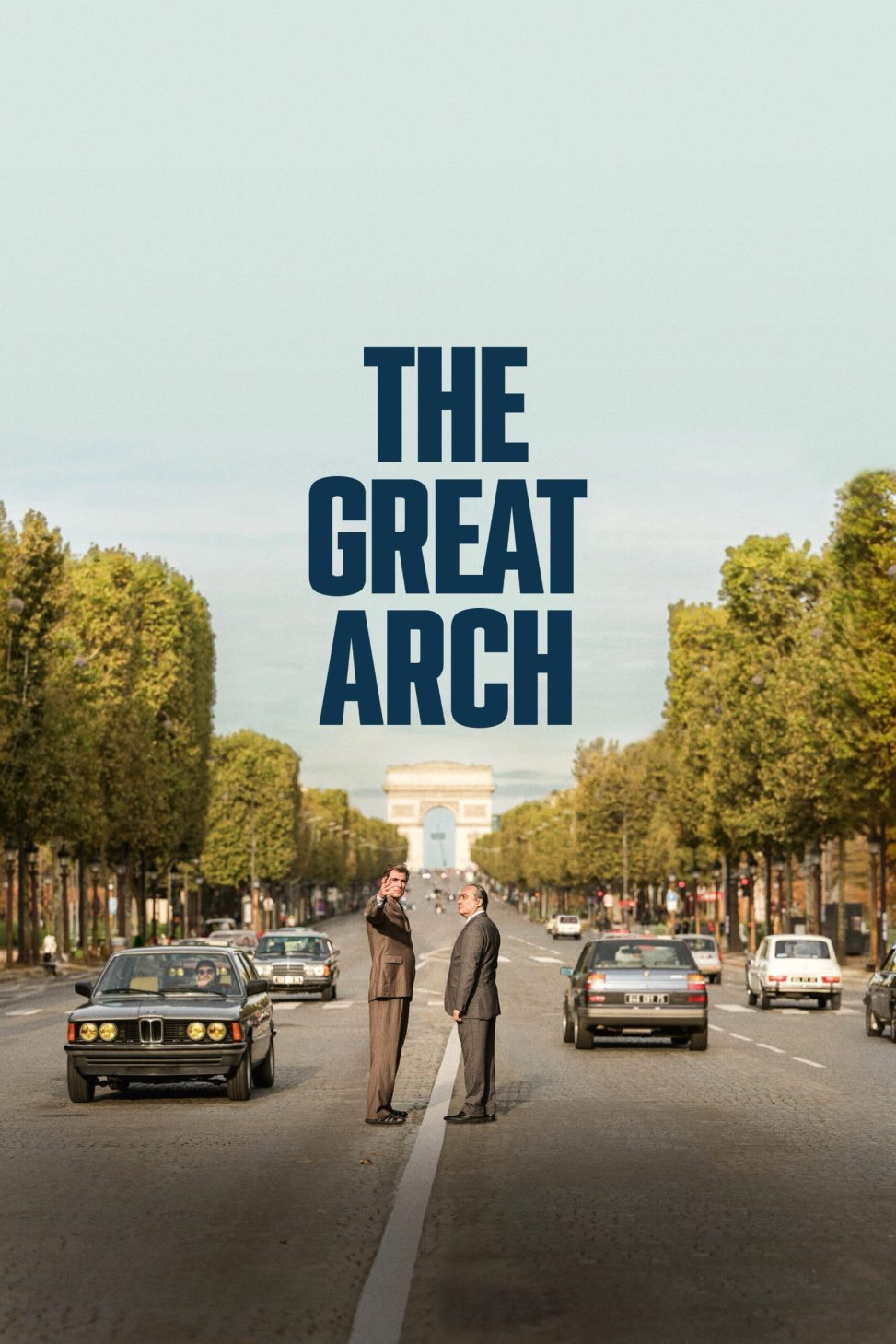
This new film from director Stephane Demoustier centres on the business quarter where the 110-metre Great Arch stands today. A monumental cube of steel, stone and glass that frames the sky, with a bank of ornamental clouds suspended in the void.
It was the vision of Johan Otto von Spreckelsen (Claes Bang), a little-known Danish architect and university prof with a very modest portfolio when he won an open international competition in 1983. The striking concept, aka the Cube, would complement the Arc de Triomphe and other iconic builds along the city’s historical axis.
It wasn’t possible to contact von Spreckelsen by telephone about the win. A staffer by the name of Subilon (Xavier Dolan) had to set off to find the prizewinning architect whose vision had caught the eye of the boss, then President Francois Mitterand (Michel Fau), and bring him back to Paris. The young technocrat tracks the architect down to a lake where he is doing a spot of fishing with his wife Liv (Sidse Babett Knudson, from the wonderful TV series Borgen). The film’s subtle humour will grow at Subilon’s expense as his charming, earnest charge becomes increasingly hard to manage.
A subtle and poignant tale of lofty ambition that sits well with current news about triumphal arches
Bit by Bit, the scale of Spreckelsen’s perfectionism and intransigence become apparent, as he digs in, realising the project is slipping away from his grasp. While there is some humour in the architect’s insistence on the quality of the marble (Carrara) and the glass panes for the build, a sense of pathos over his predicament grows. Liv, her husband’s professional partner, becomes increasingly impatient with her husband too. A critical development.
Spreckelsen is matched by the wily French architect who has been appointed to work with him. To project manage or to take over? The remarkable actor Swann Arlaud (Anatomy of a Fall) is impressive once again as rival architect Paul Andreu, a steely character intent on workarounds with the difficult principal whose vision had originally won the day.
Bit by bit, as he refuses to find a constructive role in the project team, Spreckelsen’s influence is whittled away. How fascinating to see Andreu and Spreckelsen, who speaks French well but slowly and deliberately, resort to speaking English as the divisions between them grow deeper and more intractable.
When Mitterand loses certain executive powers at an election, he remains determined to see the project through. He continues to champion the Great Arch, despite prohibitive costs, intent on maintaining the integrity of the construction, including Carrara marble that will turn pink at sunset and the vaulted ambition of its design.
Mitterand was quite a maverick. He also commissioned the sensational glass pyramid at the Louvre in the lead-up to the bicentennial of the French Revolution. And authorised a deeply shocking French secret service mission against Greenpeace in Auckland Harbour.
Some intriguing parallels with the story of Sydney’s Opera House
The ensemble cast are all in good form, with Bang in the role of vaguely eccentric von Spreckelsen, anchoring the drama, despite the eponymous suit, socks with sandals. With the considerable presence we saw in The Square, the clever, sharp black satire of the art world, his character manages to get away with this sartorial eccentricity.
The detailed and nuanced screenplay in The Great Arch has been adapted from a recent novel by Laurence Cosse, who collaborated with Demoustier during the writing stage. While it is of course a tale of vaulting ambition, the sadness is navigated with a light touch and leavened with gentle humour.
For Australian audiences, the parallels with the story of the construction of the Sydney Opera House will be strong.
Meanwhile, in the US, triumphal arches are in the news again with the US President in hot pursuit of the absurd idea. It’s fortuitous timing for this subtle, poignant character study about lofty, even outrageous, ambition and, what we like to imagine, are its limits.
Also published in the Canberra Times (7.10.26) and associated Australian Community Media outlets, and on Rotten Tomatoes