M, 101 minutes
3 Stars
Review by © Jane Freebury
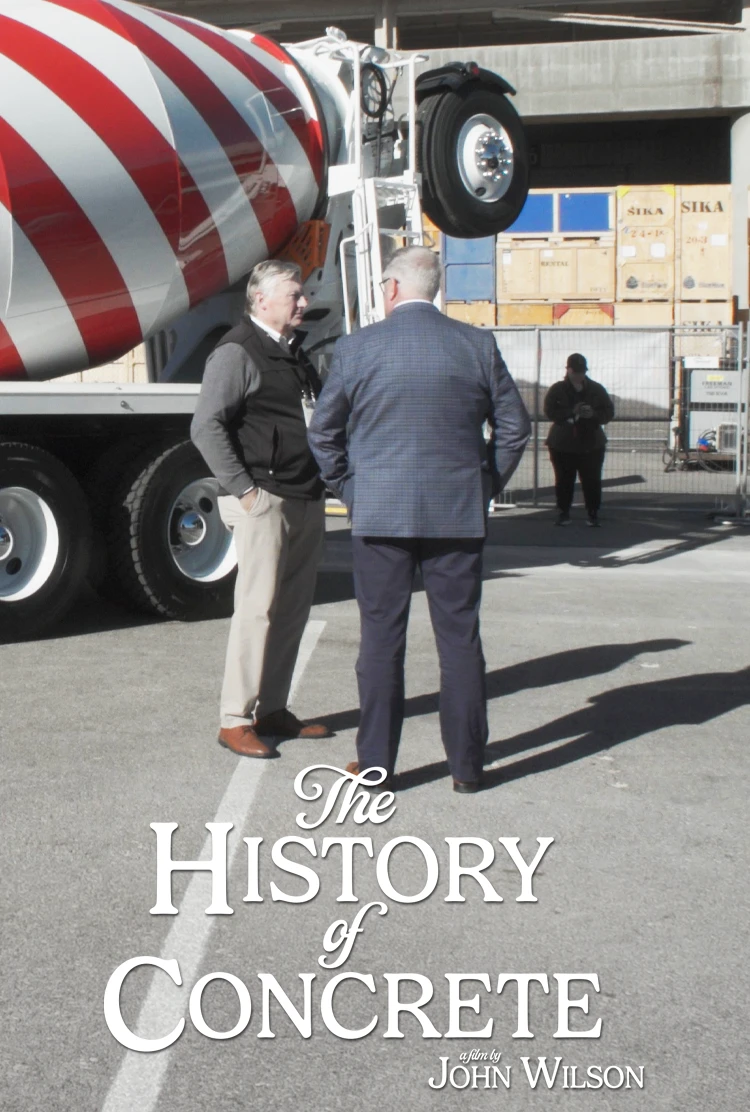
A documentary filmmaker scours his home city for new ideas, wandering through the streets of New York, recording random scenes as he goes. A billboard shows that he has had a successful TV series, but it is winding down now. This endearing and perplexing doco, nominally about concrete, is a meditation on the grey and empty space between projects.
In his off-the-wall, first-person style, John Wilson, starts out by showing how this film concept took shape, beginning with his attendance at a film workshop. A desperate move but not crazy.
At the Hallmark Movie workshop, the tutor explains how a romance woven into a story about affordable housing can work against the odds. It leads Wilson to his idea, announced at a group chat with prospective funders who sit impassively as he tells them the name of his new project. A few shots later the chat group numbers have shrunk dramatically. A wry sense of humour is a constant throughout.
Wilson’s approach is new to me but not to audiences who know him already through his show, the How To with John Wilson series. It caught on during Covid and is still on streaming platforms.
So, concrete, the second most used material on the planet, Wilson claims. The number of apartment blocks and knockdown and rebuild jobs around us here in Australia, and the burgeoning development in the countries of Asia suggest that he is right.
A desperate move but it’s not crazy
It’s different in the US where, an expert confirms, much of the old concrete infrastructure has reached the end of its life cycle and is cracking and crumbling. We have the impression that the practice of warning people to watch their step with yellow paint, or citizen repairs on deteriorating concrete is widespread in the US.
Initially, Wilson gleefully blows his budget on a visit to Rome where some of the world’s oldest concrete structures, the Pantheon and the Colosseum, are still in good nick. Why? A trio of cool-looking Italian police outside the Pantheon are at a complete loss to explain this to Wilson, despite him offering Google Translate. It’s the ‘self-healing’, he eventually notes, but omits mentioning the crucial inclusion of lime to the ancient concrete mix.
Undaunted, Wilson the social documentarist carries on, recording banal details of modern life on his return to the US, occasionally landing on an individual character, whose quirky story he follows. There is a young actor who works part-time in the concrete industry, and a runner in the Chinmoy race that takes place over 52 days around a block in Queens.
Obviously, the men at Gum Busters, a business removing chewing gum stains from the sidewalk, have a natural place in the narrative. Other characters are less interesting, like a lonely, struggling rock musician and part-time liquor sales assistant whose inclusion didn’t work for me.
Turning the space between projects into a funny/sad observational doco brings mixed results
It was not perhaps so much of a stretch to include the widow of a motorcyclist who died in a traffic accident. She keeps some tattooed skin from her partner’s forearm preserved and framed. But the brief interview with her is followed by a segue to the company that preserves the tattooed skin of the deceased. Sometimes, I admired the film’s adaptability in being able to incorporate so many disparate yarns in a single, baggy whole. Other times, the choices seemed off-piste.
John Wilson recalls the Hallmark tutor saying that this wasn’t the moment for another Ken Burns epic on the history of the American people, or for a completely different perspective like The Sopranos, but a time for finding inspiration and poetry in the difficult here and now. Wilson has brought gentle insight into this space, but the results are uneven.
Once accustomed to the tone of his narration and his deliberately clumsy, wobbly camerawork, I settled into his exploration of the space between projects. Yet if it has made a positive impression on those who enthuse about it, this quirky, awkward observational doco, by turns funny and sad, will be less compelling for others.
At its core The History of Concrete contains a single bold idea. While it doesn’t realise its promise, it still finds grace and understanding in the lives of the people who will have extreme difficulty ever making it. That’s America for you.
Published in the Canberra Times on 24 October 2026 and associated Australian Community Media outlets. Also on Rotten Tomatoes