M, 133 minutes
4 Stars
Review by © Jane Freebury
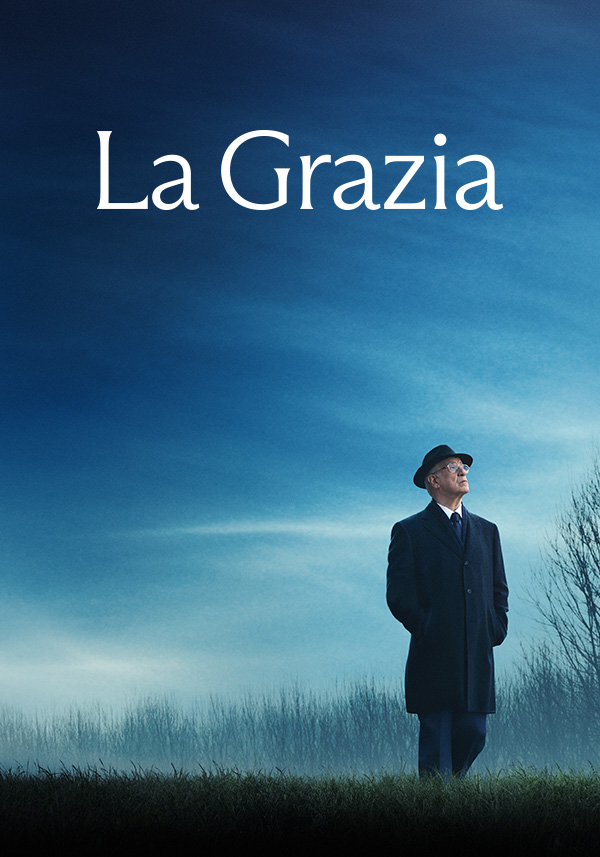
The Italian president is getting on, with six months to go until his term is over. Then he can return home. His tenure has maintained the rule of law admirably, though rectitude has earned him an unflattering nickname. Perhaps the time has come to relent a little and let the new times roll in.
His loyal daughter Dorotea (Anna Ferzetti) has been his confidant, another model of jurisprudence. She is watching his health, what’s more, trying to get him to cut down his smoking and curb his taste for pasta, but perhaps the time has come for her to shift a little too. How wonderful to propose in these turbulent times that social change can be the result of careful, rigorous thought and gentle reflection. The idea for the film came to writer-director Paolo Sorrentino when he heard about the controversial case of a man who requested a pardon for the murder of his wife, suffering Alzheimer’s Disease.
President Mariano De Santis (Tony Servillo, always terrific) and his daughter make a formidable pair, but they do not escape Sorrentino’s humour and playfulness. Il Presidente must escape to the roof to indulge his habit, and when their dear old friend Coco (Milvia Marigliano) comes to dinner, she won’t stay long, leaving abruptly in search of a more substantial meal elsewhere. Food that will cover the plate, not a single, measly aubergine medallion in the middle. It’s not a dinner, just a ‘suggestion’ she observes and leaves. Coco is a breath of fresh air in the sombre interiors of the presidential palace.
None of the characters escape Sorrentino’s playful humour
Another character with cut-through is the Pope (played by Ivory-coast born actor Rufin Doh Zeyenouin) who we meet at a private chat with De Santis. We see that even the Vatican is adapting to the winds of change with a Holy Father from Africa who wears his thick, greying hair in a pony, and rides a motorbike. A short conversation between the two men quickly reveals that there is some room for the President to move.
The formality of the visit by the President of Portugal, a head of state of roughly similar vintage, is an altogether different affair. The frail gentleman has trouble reaching the end of the red long welcome carpet, while, strangely, his hosts seem to watch on impassively as he slips in the rain.
The film’s pacing is impeccable. Scenes like these in slow-motion and the look of the film overall by renowned cinematographer Daria D’Antonio are a singular pleasure. Editor Cristiano Travalgioli, long-term Sorrentino collaborator, has nailed it too with rhythms ranging from trippy to austere.
In the midst of memories he stands stalled, like the lead in a Fellini film
With more time on his hands during his presidency’s ‘white semester’, President De Santis reflects on his dear departed wife. He is obsessed by her suspected affair. Who was it with? A sidelong glance at possible suspects reveals he is haunted by an event that occurred decades prior. Could it have been his handsome political colleague, Ugo (Massimo Venturiello)? Coco is resolutely sworn to secrecy.
De Santis stands in a hall of memory. He could be the lead in a Federico Fellini movie. Life stands still as he thinks about his political legacy, his marriage and his children. There is so much to get used to. His son has left Italy for Canada, where he is a composer of pop music, perhaps even a rapper.
As the past swirls around him, the future comes to visit too. On the walls of the palace, a large screen streams live vision of an astronaut on a space station in orbit. De Santis watches the man, suspended in a gravity-free environment much like him, and is fascinated.
On the other hand, the President is facing some extremely difficult legal decisions before he leaves office. People who have broken the law, but whose cases merit compassion, magnanimity, and grace. In other words, a pardon, la grazia. Do the special circumstances of certain crimes warrant something more than strict interpretation of the law?
This is another witty, amusing and thoughtful film from a renowned filmmaker, who has given us Il Divo, The Great Beauty, and Youth. Films that are beautiful to look at while they give us something to think about. La Grazia also comes with a playful side, showing kindness towards its characters, while happy to expose folly at the top.
Published in the Canberra Times on 19 March 2026. Also published on Rotten Tomatoes